



Think you can skip the trading journal and still make it in the markets? Many traders believe the same thing. Let us walk through the five most common reasons traders give for not journaling — and why every single one of them is actually the reason you will fail without one.
A trading journal is, without doubt, one of the most talked-about tools in the trading world. Every mentor, every course, every professional trader says you must keep one. But research shows that fewer than 5% of traders maintain a consistent trading history. So what is going on? Why do so many traders avoid journaling, and is it really possible to succeed without it?
In this blog post, we look at the five most popular excuses traders use for not keeping a trading journal. Spoiler: none of them hold up. In fact, each one is proof that a journal is exactly what you need.
Reason 1: “It Takes Too Much Time”
This is the number one excuse. You just finished a trade, the market is still moving, and the last thing you want is to sit down and write notes. Many traders feel that journaling takes away from actual trading time. They think time is better spent watching charts or finding the next setup.
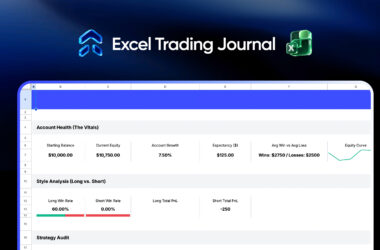
The real problem is not time. The real problem is that many traders use outdated methods such as Excel trading journals, notebooks, manual entry, etc. which make journaling slow and painful. Modern tools like UltraTrader solve this completely. UltraTrader automatically imports your trades from brokers such as Binance, Bybit, MetaTrader, cTrader, KuCoin, OKX, and more. You do not type in entry prices or exit times. The app does it for you. You just add your notes and tags, and the journal is done.
Trade more. Log less. That is how journaling should work in 2026.
Reason 2: “I Already Know What I Did Wrong”
Many traders believe they can remember their mistakes without writing them down. They think they know exactly why a trade went bad: it was the news, the spread, or bad luck.
But human memory is not reliable, especially when emotions are involved. What you think happened and what actually happened are often two very different things. According to a case study from UltraTrader users, one trader discovered in his journal that 60% of his premature exits occurred during profitable trends. Another found that 75% of his losses came from overtrading, not from bad analysis. These are patterns impossible to see without proper documentation.
A trading journal turns your feelings into cold, hard data. It eliminates guesswork and shows you the real reasons behind your wins and your losses. Without it, you are just guessing, and guessing is not a strategy.
Reason 3: “I Do Not Want To See My Losses”
This one is very human and very honest. Nobody likes looking at failures. When you lose money on a trade, the natural reaction is to forget it, move on, and hope the next one goes better. Keeping a journal means staring directly at every bad trade, every emotional decision, every blown stop loss.
But this avoidance is exactly why most traders never improve. Data suggest that between 72% and 85% of retail traders lose money on their accounts. The traders who break out of this statistic are the ones who face their numbers honestly. A trading journal keeps you 100% honest. Don’t forget that the numbers never lie.
With an automated trading journal like UltraTrader, reviewing your losses does not have to feel like punishment. The dashboard shows your Realized PNL, Win Rate, Profit Factor, Expected Value, and Average Risk-to-Reward, all presented in clean visual dashboards. You see patterns, not just pain. You see that maybe your short trades are weaker than your longs, or that Tuesday mornings consistently hurt your performance. That kind of insight turns a painful loss into a valuable lesson.
Reason 4: “My Broker Already Tracks My Trades”
Yes, your broker keeps a record of your transactions: entry, exit, profit, loss. So why bother with a separate journal? This is actually a very logical question.
The answer is simple: a broker record tells you what happened. A trading journal tells you why it happened. Your broker does not track your emotions, your strategy tags, the market conditions, or whether you followed your plan. It does not show you that your win rate drops every Friday afternoon, or that you overtrade after a big win.
A proper trading journal like UltraTrader goes far beyond transaction logs. It provides powerful analytics, including symbol performance rankings, long-versus-short analysis, hourly and daily PNL breakdowns, calendar heatmaps, and hold-time comparisons between winners and losers. It answers questions your broker will never answer: Is my edge stable or fragile? Which sessions and timeframes actually work for me? Am I taking the same risk across correlated markets without realizing it?
These are the questions that separate profitable traders from the 85% who lose.
Reason 5: “Journals Are For Beginners, I Am Past That”
Some experienced traders think journaling is a beginner exercise, something you do when you are learning and then drop once you “know what you are doing.” This is perhaps the most dangerous excuse of all.
Ask any experienced, professional trader, and they’ll admit to the benefits of consistent journaling. Markets change. Your psychology changes. What worked six months ago may not work today. Without a journal, you have no way to detect when your edge is eroding. A high win rate might feel great, but if your average risk-to-reward is dropping, your system could be fragile, and you would never know without the data.
Traders who use a systematic journal show a 23% improvement in monthly performance within just 60 days of consistent use. And the benefits compound over time, documented improvements range from 15% to 40% in overall performance for traders who maintain structured journals.
UltraTrader’s analytics are built specifically for this kind of ongoing self-assessment. The Profit Factor metric shows whether your system truly produces profits or just survives on luck. The Expected Value calculation tells you exactly how much each trade is worth on average over the long run. These are not beginner metrics. These are the tools that professional, consistent traders rely on.
The Real Reason You Should Use A Trading Journal
Every excuse on this list points to the same conclusion: traders who avoid journaling are avoiding accountability. And accountability is the one thing that separates consistent winners from everyone else.
The market does not care about your excuses. It does not care if you are busy, if you think you remember, or if you believe you are too experienced. The data is clear: Traders who journal perform measurably better than traders who do not.
If the old way of journaling seemed like a chore, you were using the wrong tool. UltraTrader was built to remove every barrier. Automatic trade imports, multi-market support, visual dashboards, strategy tags, and deep analytics: all in one app for crypto, forex, stocks, and commodities. Over 50,000 traders globally already trust it. UltraTrader offers a free trial so that you can test its features without commitment. And all of the core features of UltraTrader are free. Forever.
Stop making excuses. Start journaling. Your future self and your account balance will thank you. Strat journalling now!